

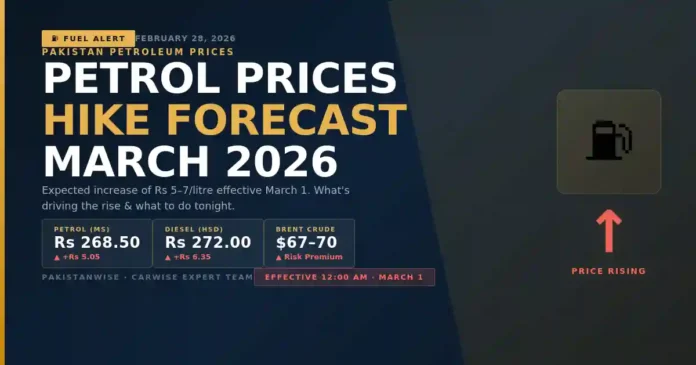
Based on the latest Platts pricing data and exchange rate trends, petrol prices are expected to rise by Rs 5.05/litre (to Rs 268.50) and diesel by Rs 6.35/litre (to Rs 272.00), effective 12:00 AM on March 1, 2026.
As February comes to a close, motorists across Pakistan are awaiting the government’s official announcement of petroleum prices for the first half of March 2026 (March 1–15). Recent volatility in global oil markets, combined with fiscal pressures at home, suggests a moderate increase in fuel prices is likely.
Below is a detailed forecast and breakdown of the expected revision.
Quick Forecast Summary (Effective March 1, 2026)
Based on recent global oil trends, exchange rate stability, and current tax structures, the projected adjustments are as follows:
| Fuel Type | Current Price (PKR/Ltr) | Expected Increase | Estimated New Price (PKR/Ltr) | Key Reason |
|---|---|---|---|---|
| Petrol (MS) | Rs 263.45 | + Rs 5.05 | Rs 268.50 | Global oil spike & revenue pressures |
| High-Speed Diesel (HSD) | Rs 265.65 | + Rs 6.35 | Rs 272.00 | Higher import premium & demand |
| Kerosene Oil | Rs 184.50 | + Rs 3.00 | Rs 187.50 | Minor global adjustment |
| Light Diesel Oil (LDO) | Rs 162.80 | + Rs 2.50 | Rs 165.30 | Industrial pricing revision |
Note: These are estimates based on the average Platts price over the last fortnight and the current Petroleum Levy structure. The official notification is expected late tonight.
Why a Price Hike Appears Likely
1. Global Oil Price Volatility
Although 2026 began with expectations of a global oil surplus, the second half of February witnessed renewed volatility in Brent crude prices. Prices hovered between $67–$70 per barrel, up from earlier forecasts of around $60.
This surge has largely been attributed to geopolitical tensions in the Middle East, adding a temporary “risk premium” to global crude markets. Since Pakistan imports most of its crude oil, international price movements directly impact domestic fuel rates.
2. Fiscal Pressures and Petroleum Levies
The Federal Board of Revenue (FBR) reportedly faced a significant shortfall in tax collection during the first half of the fiscal year. Under the current IMF Extended Fund Facility (EFF), the government has limited room to reduce taxes or absorb international price increases.
Currently applied levies include:
| Levy Type | Rate per Litre |
| Petroleum Levy – Petrol | Rs 79.62 |
| Petroleum Levy – Diesel | Rs 75.41 |
| Climate Support Levy | Rs 2.50 |
Given fiscal constraints, it is unlikely that these levies will be reduced in the upcoming review. As a result, most of the international price increase may be passed on to consumers.
3. Exchange Rate Stability
The Pakistani Rupee remained relatively stable against the US Dollar during February 2026. While this stability offers some support, it is not sufficient to offset the recent spike in global crude oil prices.
Where Your Money Goes: Petrol Price Breakdown
If the forecasted price of Rs 268.50 per litre materializes, the approximate distribution would be:
| Component | Amount (PKR) | % of Price |
| Ex-Refinery Price | ~Rs 165.00 | ~61.5% |
| Petroleum Levy | Rs 79.62 | 29.7% |
| Distributor / Dealer Margins | ~Rs 17.00 | ~6.3% |
| IFEM (Freight Equalization) | ~Rs 5.00 | ~1.9% |
| Climate Support Levy | Rs 2.50 | 0.9% |
This breakdown highlights that a significant portion of the pump price consists of taxes and levies.
Impact Analysis
Government Perspective
- IMF compliance: Maintaining high levies ensures the release of the next loan tranche.
- Debt servicing: The Petroleum Levy is a primary source of liquid federal revenue.
Consumer Perspective
- Transport fares: A diesel (HSD) hike immediately raises freight costs, increasing prices of vegetables, food, and consumer goods.
- Disposable income: With inflation already straining household budgets, an additional Rs 5–7 per litre adds meaningful pressure on the middle class.
- Industrial costs: Higher LDO prices raise operating costs for small and medium industries.
A moderate increase of Rs 5–7 per litre may appear small, but it can significantly impact inflation and disposable income over time.
Frequently Asked Questions (FAQs)
1. When will the new petrol prices be announced?
The Ministry of Finance is expected to release the official notification tonight, February 28, 2026, typically between 10:00 PM and 11:59 PM.
2. Why are prices rising despite low annual forecasts?
While annual forecasts for 2026 predict lower average oil prices, local pricing is based on the most recent 15-day average. The late-February spike influences the current revision.
3. Will the Petroleum Levy increase further?
The levy is already near its legislative cap. It is unlikely to be increased further in this review, but a reduction also appears unlikely.
4. Is diesel also expected to increase?
Yes. High-Speed Diesel (HSD) is expected to see a slightly higher increase compared to petrol due to import premiums and international demand.
5. When will the new rates take effect?
If approved, the revised prices will take effect at 12:00 AM on March 1, 2026, and remain valid until March 15, 2026.
Conclusion
Based on current global market trends and fiscal considerations, a moderate fuel price increase appears likely for the first half of March 2026. Motorists may consider planning accordingly ahead of the official announcement.
The final decision rests with the government, and exact figures will be confirmed in the official notification later tonight.

